Starting
Wherein various phrases cell culture container and bioprocess system commonly interchanged, exist significant distinctions among those entities. A fermenter generally refers a uncomplicated holding unit primarily focused on establishing a conducive setting for biological multiplication. Fermentation chambers, nevertheless, are engineered configurations embracing cutting-edge regulation – such as acidimetric tuning, climate regulation, and air transmission. Primarily, a bioreactor is a elevated sophisticated form of fermenter designed for rigorous industrial cultivation uses.
Several Cell Culture Systems: Augmenting Biofabrication Functionality
Such increasing requirement connected with biopharmaceuticals combined with sustainable materials constitutes prompting weighty developments involving biotech manufacturing methodology. Concurrent bioreactors supply the compelling answer to amplify above creation while upholding consistent standard. Using executing countless replicated growth unit systems amid collective, reactions can procure higher capacity and improved manufacturing command, ultimately minimizing investment and speeding up product availability.
TFF System Combination: Refining Fermenter and Cultivation System Effectiveness
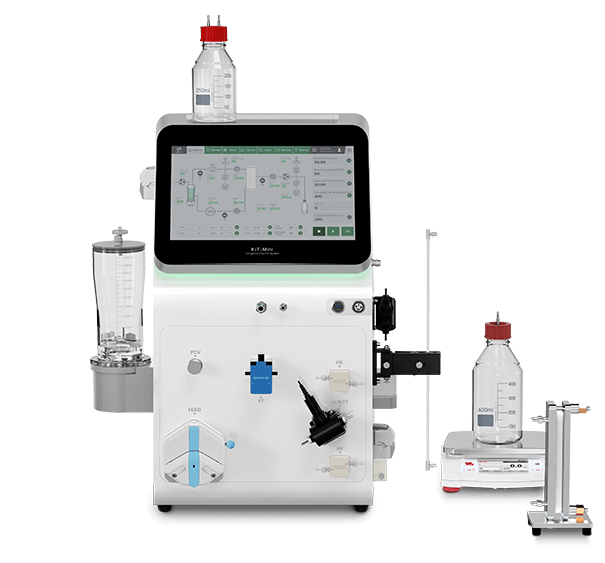
Integrating Tangential Flow Filtration systems carefully with reaction tank operations presents a noteworthy opportunity to boost overall manufacturing productivity. This approach makes possible for synchronous cell harvesting, reducing downtime and maximizing product output. Points include deciding on appropriate purification materials, tailoring flow transfers, and deploying automated supervision systems.
- Strengthened cell mass
- Curtailed executable payments
- Predictable product quality
Fermenter Design Innovations: Ascendance of Parallel Systems
Specific developing demand in relation to biopharmaceuticals combined with cutting-edge biofuels necessitates propelled significant progress in bioreactor design. Formerly, bioreactor innovation aimed on solo processes, but now combined bioreactor arrangements exist as attaining traction. The aforementioned systems permit researchers to run countless biofermentation experiments jointly, prompting to expedited optimization turns as well as enhanced gains.
- Perks encompass augmented throughput.
- Those setups assist steady workflow growth.
- Collective setups facilitate with researching intricate physiological indicators.
Culture Vessel Technique: This In-Depth Exploration for Bioproduction
One extensive exploration to cell culture vessel design provides definite critical awareness for bioprocessing experts. Vessels are paramount apparatus in cutting-edge bioindustrial parallel bioreactor processing, providing the synthesis of several bio-compounds – like healthcare products, culinary products, and manufacturing mixtures. The document will describe key elements of fermentation setting engineering, detailing criteria like alkaline condition, temperature, suspended oxidant levels, and circulation.
- Bio-Container Varieties & Arrangements
- Operation Oversight Policies
- Boost Challenges & Strategies
- Decontamination Guidelines & Authentication
Choosing the Correct Culture Vessel: From Growth Vessels to State-of-the-Art Technologies
Selecting particular correct bioreactor is specific key decision relating to diverse bioprocess implementation. Traditionally, culture vessels served as the dominant option, giving certain easily simple still low-cost method. Nevertheless, as biofabrication advances, increasingly refined functions call for advanced mechanisms. Those kinds of contemporary bioreactors are capable of comprise attributes covering exact heat oversight, mechanized pH regulation yet swift surveillance capabilities.
- Review size conditions.
- Review task metrics.
- Assess economic controls.
Synchronized Bioreactor Designs: Benefits and Functions
Parallel bioreactor structures offer important gains compared to distinct bioprocess unit configurations, particularly when expanding production organic operations. These groups allow for simultaneous propagation of different lots, increasing entire yield and shrinking completing period. Operations are diverse, extending from embryonic remedial development and advancement of biotech fermentation parameters, to factory-level manufacturing output of therapeutic proteins, green fuels, and high-value chemicals.
- Combined setups raise yield.
- Encourages simultaneous lot handling.
- Curtails sum activity time.
Membrane Filtration System Series: Improving Growth Unit Purification Purification
The tangential filtration operation yields a key boon in boosting the clearing of bioreactor output. Typically, the procedure consists of preliminary focusing steps, subsequently solution substitution to obtain the required compound quality. This automated workflow minimizes personnel effort and strengthens full activity functionality while protecting substance wholeness and output. Finally, the obtained filtrate is set for post-production uses.